Key Takeaways
- The U.S. Department of State is pausing immigrant visa (green cards) issuances for nationals of 75 countries, effective January 21, 2026.
- The pause applies to immigrant visas that are processed abroad, not temporary visas like tourist, student, or most work visas.
- This will likely not impact work related visas such as H-1Bs, L-1s, student visas such as F-1 or J-1s, or tourist visas.
- Applicants may still submit applications and attend interviews, but no immigrant visas will be issued during the pause.
- There is no announced end date for the pause.
What is happening?
The U.S. Department of State announced that it plans to freeze immigrant visa processing for nationals of 75 countries, effective January 21.
Immigrant visas are issued to individuals applying for lawful permanent residence (green cards) from outside the United States through U.S. embassies and consulates. Under this guidance, embassies and consulates will continue to accept applications and conduct interviews, but immigrant visas will not be issued to affected nationals during the pause.
The measure is being described as a processing pause, not a formal change to immigration law. However, it may prevent cases from moving forward at critical stages, including interview scheduling and final visa issuance. At this time, there is no publicly stated timeline for when processing may resume.
Countries included in the immigrant visa processing pause
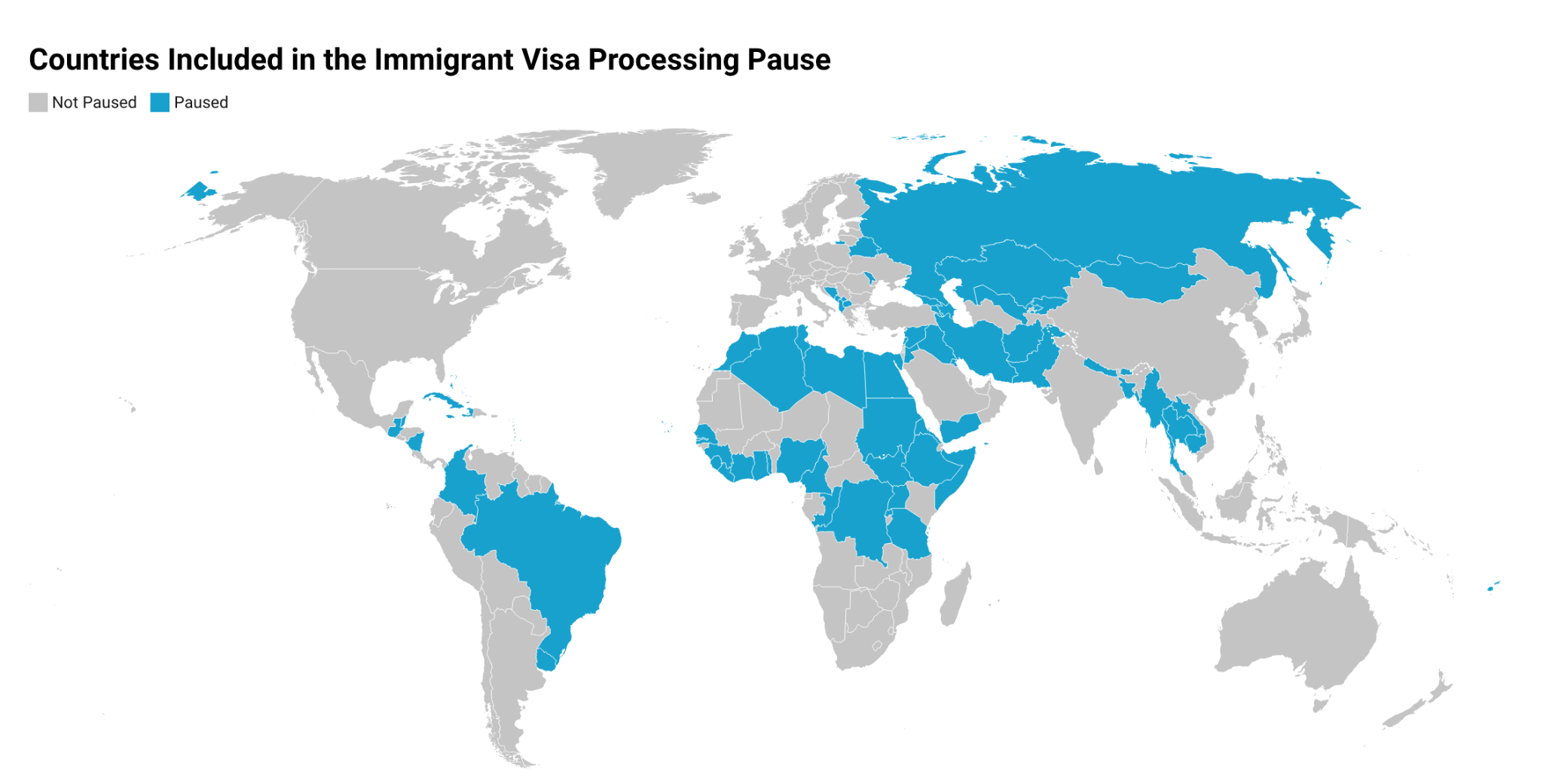
According to the U.S. Department of State, immigrant visa issuance is paused for nationals of the following countries:
- Afghanistan
- Albania
- Algeria
- Antigua and Barbuda
- Armenia
- Azerbaijan
- Bahamas
- Bangladesh
- Barbados
- Belarus
- Belize
- Bhutan
- Bosnia and Herzegovina
- Brazil
- Burma (Myanmar)
- Cambodia
- Cameroon
- Cape Verde
- Colombia
- Côte d’Ivoire
- Cuba
- Dominica
- Egypt
- Eritrea
- Ethiopia
- Fiji
- The Gambia
- Georgia
- Ghana
- Grenada
- Guatemala
- Guinea
- Haiti
- Iran
- Iraq
- Jamaica
- Jordan
- Kazakhstan
- Kosovo
- Kuwait
- Kyrgyzstan
- Laos
- Lebanon
- Liberia
- Libya
- North Macedonia
- Moldova
- Mongolia
- Montenegro
- Morocco
- Nepal
- Nicaragua
- Nigeria
- Pakistan
- Republic of the Congo
- Russia
- Rwanda
- Saint Kitts and Nevis
- Saint Lucia
- Saint Vincent and the Grenadines
- Senegal
- Sierra Leone
- Somalia
- South Sudan
- Sudan
- Syria
- Tanzania
- Thailand
- Togo
- Tunisia
- Uganda
- Uruguay
- Uzbekistan
- Yemen
Who may be affected?
You may be affected if you are:
- Applying for a family-based immigrant visa (for example, as the spouse, parent, or adult child of a U.S. citizen or permanent resident)
- Applying for an employment-based immigrant visa
- Previously selected for the Diversity Visa (DV) Lottery
- Completing immigrant visa processing through a U.S. embassy or consulate outside the United States
The pause is based on nationality, regardless of where the applicant currently lives.
Who is likely not affected?
- Nonimmigrant (temporary) visas — including tourist (B-1/B-2), student (F/M), exchange (J), and most temporary work visas — are not affected.
- Individuals applying for Adjustment of Status (AOS) from within the United States through USCIS are not part of consular immigrant visa issuance, though cases may still be indirectly impacted.
What does a “processing freeze” mean?
During the pause:
- Interviews may continue to be scheduled and conducted
- Applications may remain in pending or “ready” status
- No immigrant visas will be issued to affected nationals
- Backlogs may increase once issuance resumes
The pause does not mean applications are denied, and no immigrant visas have been revoked as part of this guidance.
What should applicants do now?
If you think this pause might affect you:
- Keep checking messages from your U.S. embassy, consulate, or the National Visa Center (NVC)
- Attend any scheduled interviews unless you’re told otherwise
- Make sure your passport and documents stay valid and up to date
- Hold off on major travel, housing, or job decisions until there’s more clarity
- Watch out for scams or anyone promising to “fast-track” your case
If you’re feeling unsure about how this applies to you or what to do next, reach out to Ellis. Our immigration experts can help you understand your options and what steps (if any) make sense for your situation right now.
What we’re watching
We are continuing to monitor:
- Updates from the Department of State on the duration of the pause
- Any additional guidance or exceptions
- Operational changes at U.S. embassies and consulates
Ellis is actively monitoring guidance from the U.S. Department of State and will update as more information becomes available.
This page is provided for general informational purposes only and does not constitute legal advice. Immigration policies and procedures can change, and how they are applied may vary based on individual circumstances.
Are there any exceptions?
Yes. According to the Department of State:
Dual nationals applying with a valid passport from a country not listed above are exempt from the pause.