
Project Firewall is a U.S. Department of Labor (or DOL) enforcement initiative for the H-1B visa program. The Department of Labor launched it on September 19, 2025, and the Wage and Hour Division runs it. Under Project Firewall, the government investigates whether employers follow H-1B wage and hiring rules. Employers that break the rules can face back wages, fines, and removal from the H-1B program.
Not sure what Project Firewall means for your company or your visa? This guide explains what the initiative is, what the Department of Labor plans on doing, what it investigates, the penalties for employers, and what workers should know.
Key Takeaways
- What is it? The Department of Labor's H-1B enforcement initiative, launched September 19, 2025 and run by the Wage and Hour Division. Penalties can reach back wages, civil fines, and exclusion (or 'debarment') from the program.
- Latest: In July 2026, Vice President JD Vance announced a new H-1B fraud push under Project Firewall, saying the DOL had issued dozens of subpoenas.
- Important: Project Firewall targets the EMPLOYER, not the worker. If your employer is investigated, your job is to make sure your own wage, job, and visa records are correct.
- Need help? Ellis combines immigration attorneys and case-tracking software to keep your H-1B filings accurate and on time. Start here →
What is Project Firewall?
Project Firewall is the Wage and Hour Division's enforcement initiative for the H-1B visa program. The Department of Labor launched it on September 19, 2025.
The DOL says the goal is to protect the wages and jobs of American workers and to make sure employers follow H-1B rules. "By rooting out fraud and abuse, the Department of Labor and our federal partners will ensure that highly skilled jobs go to Americans first," said Secretary of Labor Lori Chavez-DeRemer in the launch announcement.
Project Firewall is not a new law. It is a plan to use enforcement powers the department already has more actively. The DOL calls one part of it historic: for the first time, the Secretary of Labor will personally sign off on the start of certain investigations.
Why did the DOL launch Project Firewall?
The DOL says it launched Project Firewall to protect American workers and to reduce misuse of the H-1B program. The initiative is part of a wider 2025 push by the Trump administration to tighten immigration enforcement.
The H-1B program lets U.S. employers hire foreign workers in specialty occupations. Most employers use it legally. Some critics of H-1B argue that a share of employers use it to pay lower wages or to skip over American workers. H-1B proponents say the program fills real skill gaps and that statistics show that abuse is uncommon. Project Firewall reflects the current administration's position that stronger enforcement is needed.
How does Project Firewall work?
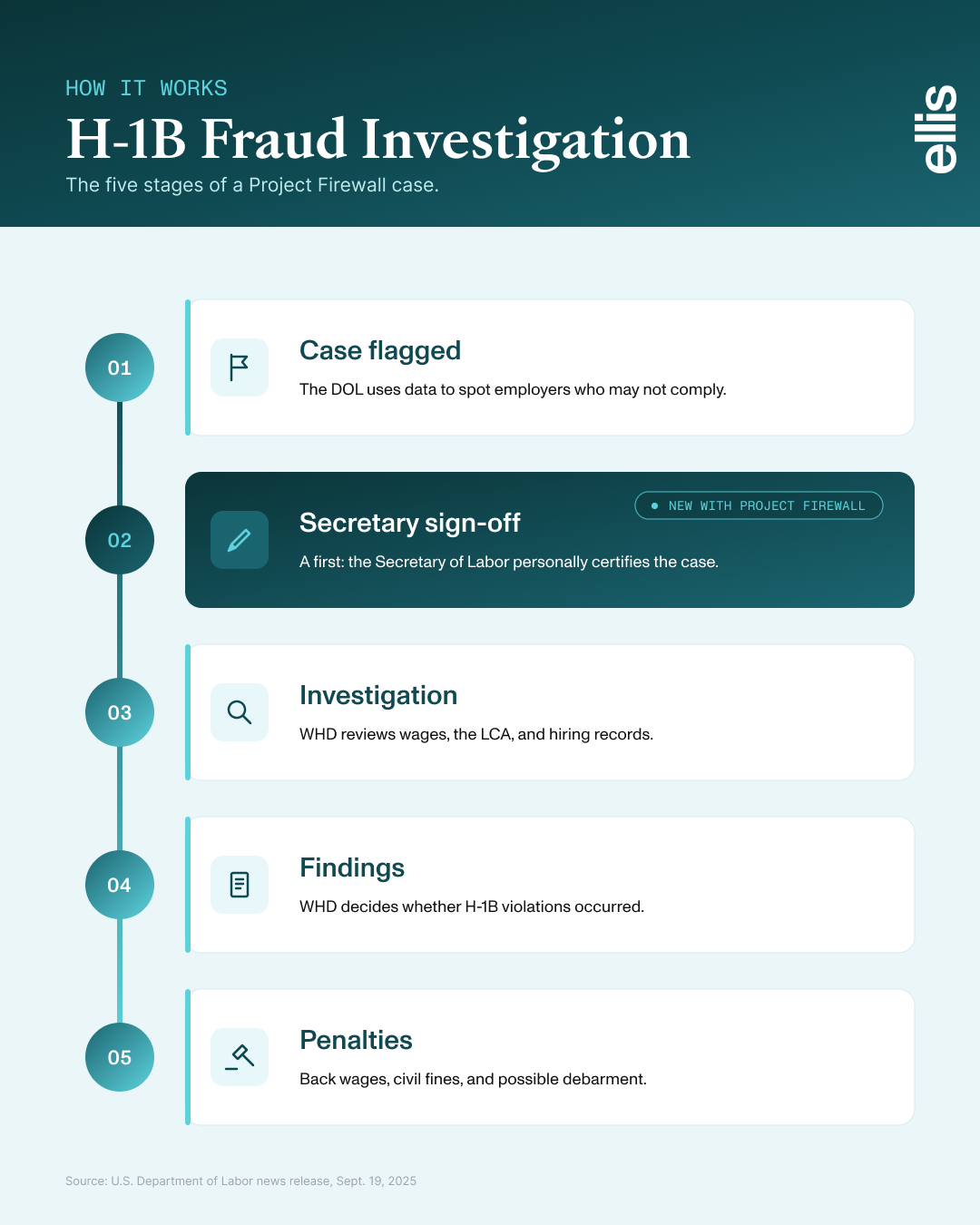
Under Project Firewall, the Wage and Hour Division opens investigations into employers and applies penalties when it finds violations. The department says it will focus on cases where abuse looks most likely.
A new feature is who signs off. For the first time in the department's history, the Secretary of Labor can personally approve the start of an investigation. The DOL says it uses this power when there is "reasonable cause" to believe an employer is not following the rules.
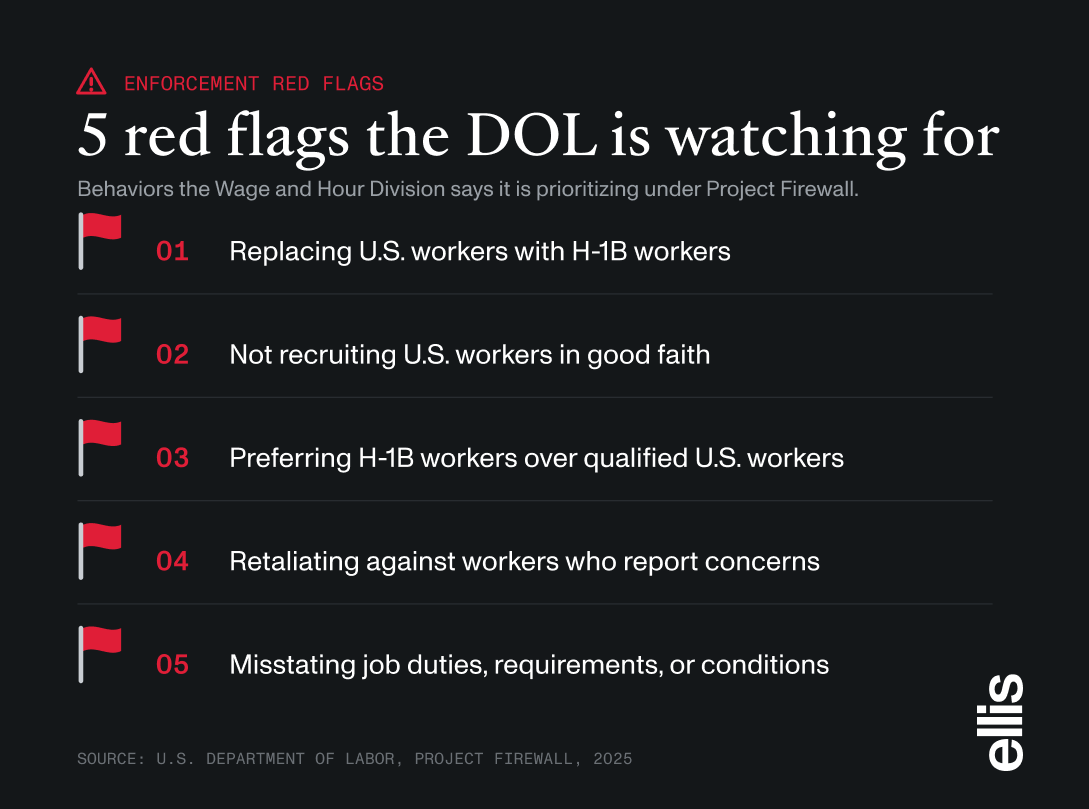
The Wage and Hour Division says it is looking closely at employers who may be:
- Replacing U.S. workers with H-1B workers.
- Not trying in good faith to recruit U.S. workers.
- Choosing H-1B workers when qualified U.S. workers are available.
- Punishing workers who report problems.
- Misstating job duties, requirements, or working conditions.
News outlets have reported that the DOL opened more than 175 H-1B investigations in the first months of the initiative. That number changes over time, so treat it as a snapshot.
Project Firewall and the 2026 H-1B fraud crackdown
In 2026, Project Firewall grew into a wider H-1B fraud enforcement drive. On July 8, 2026, Vice President JD Vance announced a new push against H-1B visa fraud. He said the Department of Labor had issued dozens of subpoenas and opened new investigations into companies accused of misusing the program to undercut American workers.
Vance framed the effort as protecting U.S. jobs. As of this writing, the administration has not announced criminal charges in the new cases. The early focus is on subpoenas, audits, and coordination among federal agencies. Supporters say the crackdown targets real abuse. Critics question how common H-1B fraud actually is. As with the rest of Project Firewall, the results will become clearer over time.
What does Project Firewall investigate?
Project Firewall looks at whether employers follow the wage and job rules of the H-1B program. Most cases start with the Labor Condition Application, or LCA. The LCA is the form an employer files to promise it will pay the required wage and meet other conditions.
Common problem areas include paying H-1B workers below the prevailing wage, listing a job or worksite on the LCA that does not match the real job, and not truly considering available U.S. workers. Wage theft and hiring bias against American workers are also in scope. The DOL describes its targets as "fraud and abuse." H-1B fraud can include faking job details, using shell companies, or misstating where and how a worker actually works.
Which agencies are involved?
Project Firewall is not only a Department of Labor effort. Inside the DOL, the Office of Immigration Policy, the Employment and Training Administration, and the Wage and Hour Division lead the work. They also share information with other federal agencies. This means one case can touch immigration, civil rights, and wage issues at once.
Agency | Role in Project Firewall |
|---|---|
Wage and Hour Division (WHD) | Leads H-1B wage and compliance investigations. |
USCIS | Handles H-1B petitions and can act on fraud findings. |
EEOC | Looks at bias against U.S. workers. |
DOJ, Civil Rights Division | Handles discrimination and civil rights cases. |
What penalties can employers face?
Employers found in violation can face large financial and program penalties. When the Wage and Hour Division finds violations, it can:
- Collect back wages owed to workers.
- Require repayment of benefits the employer owed.
- Set civil money penalties based on how serious the violation is.
- Impose debarment, which blocks the employer from the H-1B program and some other visa programs for at least one year.
Debarment is often the worst outcome. For a company that relies on foreign talent, losing the H-1B program for a year or more can cost far more than any single fine.
What Project Firewall means for H-1B employers
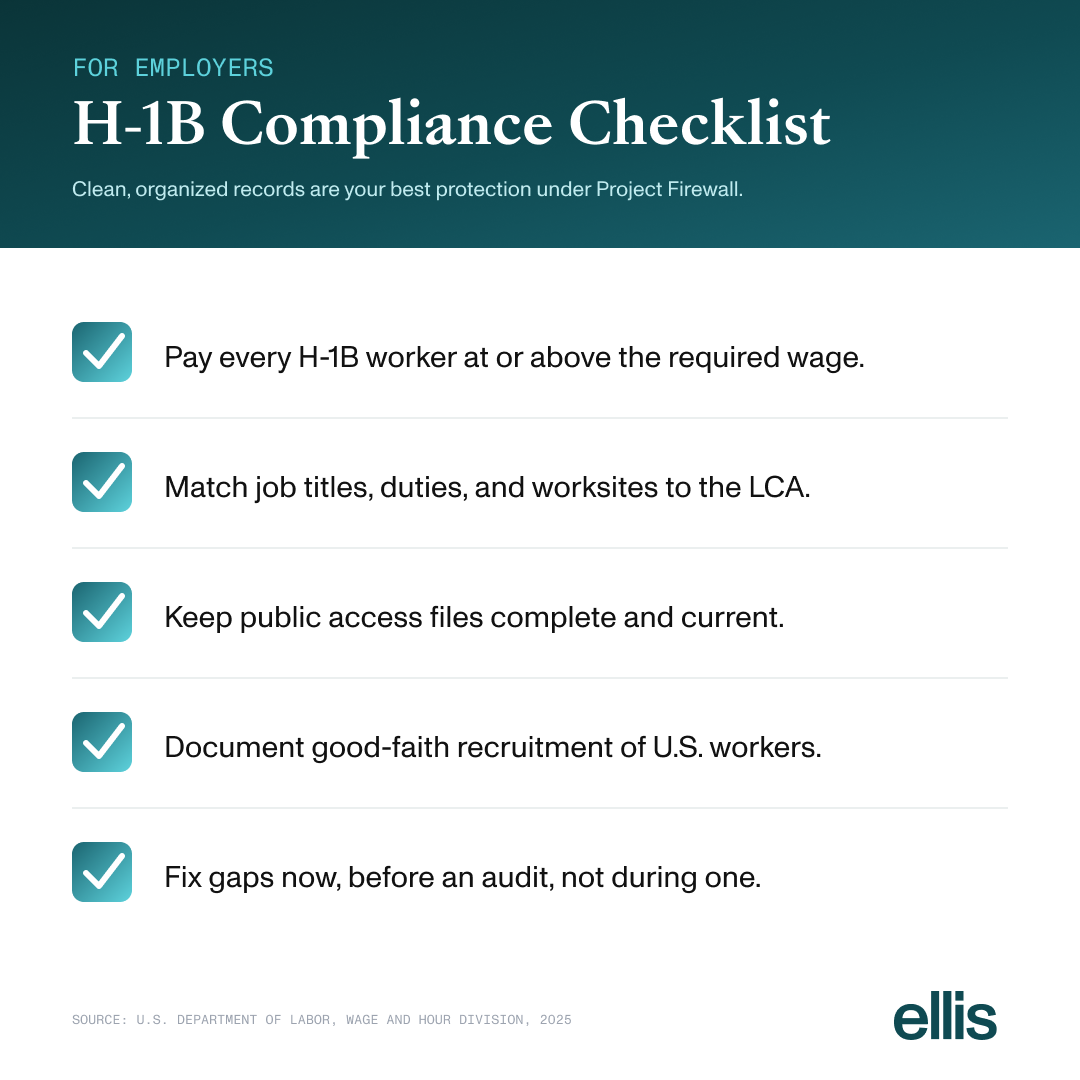
If you sponsor H-1B workers, now is a good time to check your records. Clean, correct paperwork is your best protection.
Confirm that each H-1B worker is paid at or above the required wage. Check that job titles, duties, and worksites match what you filed on the LCA. Keep your public access files complete and up to date. Keep proof that you looked at U.S. workers in good faith. If you find a gap, it is better to fix it now than to explain it during an audit.
What Project Firewall means for H-1B workers
Project Firewall targets employers, not workers. You are not the subject of these investigations. Still, a case against your employer can affect your job, so it helps to be ready.
Keep your own records safe. Save copies of your LCA, pay stubs, offer letter, and job description. If you think your employer is underpaying you or misstating your role, you have the right to speak up. The law protects you from being punished for reporting in good faith. Workers can report H-1B violations by filing Form WH-4 with the nearest Wage and Hour Division office. An investigation can also affect your immigration status, so it is worth planning ahead.
How Ellis can help
H-1B rules are easy to get wrong, and the stakes are higher under Project Firewall. Ellis brings immigration attorneys and case-management software together in one place, keeping every filing, wage record, and deadline organized. That makes it easier to catch and fix problems early. Schedule a free consult →
This article is for informational purposes only and is not legal advice.