

On November 16, 2026, the Department of Labor proposed a PERM overhaul that would make employment-based green cards slower and stricter to sponsor. It would end Schedule A (the shortcut that lets nurses, physical therapists and people with exceptional ability skip PERM recruitment), move recruitment online with job ads that run at least 90 days, and bar filing for 2 years after related layoffs. None of it is in effect yet, public comments run until around January 16, 2027.
Key Takeaways
- The Department of Labor wants to make the biggest changes to PERM labor certification in about 20 years, but today's rules remain in place until it issues a final rule.
- The rule would end Schedule A, so employers sponsoring nurses, physical therapists, and people with exceptional ability would need to complete full PERM before filing an I-140.
- These modernization rules would require employers tp recruit mostly online, keep job ads up for at least 90 days, and lose the ability to file PERM for 2 years after laying off U.S. workers in the same or a similar job.
- Anyone can comment on the proposal for 60 days after the Federal Register publishes it on November 17, 2026.
What did the Department of Labor propose for green cards?
The Department of Labor (DOL) released a proposed rule on November 16, 2026, that rewrites most of the PERM labor certification program. The Federal Register will publish it on November 17 as document 2026-23370.
Employers use PERM to show DOL that no qualified U.S. worker is available for a job before they sponsor a foreign worker for a green card. Most EB-2 and EB-3 cases go through PERM. EB-1 petitions and EB-2 National Interest Waivers (NIW) skip it, so the proposal would not change those paths directly.
DOL still has to review public comments and publish a final rule before any of these changes apply.
What are the PERM rule changes?
The proposal reaches almost every step of PERM, from how employers advertise a job to how they file.
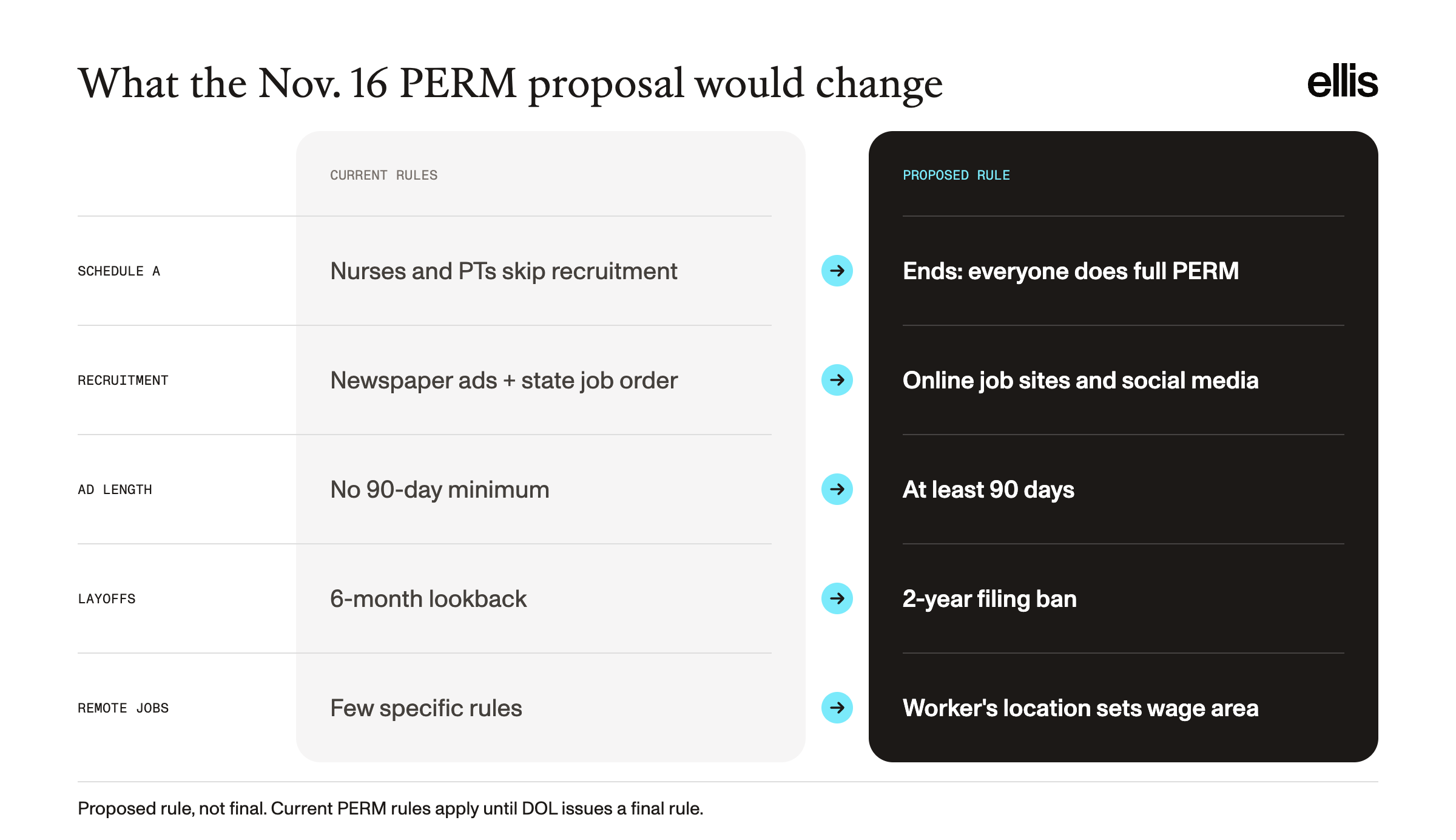
Recruitment moves online
DOL would replace print newspaper ads with online recruitment. Employers could use their own website, job search websites, social media, and job fairs or on-campus recruiting. They would also submit a recruitment report with the PERM application, so DOL sees the results up front.
Job ads would run at least 90 days
Employers would keep job ads up for at least 90 calendar days, or as long as they usually advertise similar jobs, whichever is longer. They would also need to finish recruiting 30 to 60 days before filing. These rules would stretch the recruitment process to about four months or more.
New rules for remote jobs
For remote roles, the worker's actual city, county, and ZIP code would set the place of employment. That location also sets the area DOL uses for the prevailing wage. DOL also wants public input on whether fully remote jobs should stay eligible for PERM, or whether they should require some onsite work.
More notices, electronic filing, and recordkeeping
The proposal also adds several compliance steps:
- Employers would file prevailing wage requests and PERM applications through a central DOL system, and DOL would send decisions straight to USCIS.
- Employers would give notice of filing to more workers, including electronic notice for remote jobs and notice about placement at third-party worksites.
- Employers, attorneys, and agents would keep PERM records for 5 years.
- DOL could debar an employer from all of its labor certification programs at once, and it could also debar attorneys and agents for their own misconduct.
Area | Current rule | Proposed rule |
|---|---|---|
Schedule A | Nurses, physical therapists, and people with exceptional ability skip the labor market test | DOL ends Schedule A |
Recruitment | 30-day state job order, two Sunday newspaper ads, and extra steps for professional jobs | Mostly online: employer website, job sites, social media, and job fairs or campus recruiting |
Ad length | No 90-day minimum | At least 90 days, or longer if the employer usually advertises similar jobs longer |
Layoffs | Employers with layoffs in the past 6 months must contact and consider laid-off workers | Employers can't file PERM for 2 years after layoffs in the same or a similar job |
Remote jobs | Little specific guidance | The worker's actual location sets the place of employment and wage area |
Is Schedule A ending for nurses and physical therapists?
Yes, if DOL finalizes the rule as written. Schedule A is DOL's list of jobs with known U.S. worker shortages: professional nurses, physical therapists, and people with exceptional ability in the sciences or arts. Today, employers sponsoring these workers skip PERM recruitment and file the labor certification with the I-140 at USCIS.
Under the proposal, employers would take these cases through full PERM, including 90 days of recruitment and DOL review. That would add months to the green card timeline for foreign-trained nurses and physical therapists. Hospitals and health systems have relied on Schedule A for years to fill hard-to-staff roles, so the change reaches well beyond tech.
How would the layoff rule affect green card sponsorship?
The proposal bars an employer from filing PERM if it laid off U.S. workers in the same or a similar occupation, at the same place of employment, in the past 2 years. Today's rules look back only 6 months, and they ask employers to contact and consider laid-off workers rather than stop filing.
The proposal adds layoff rules after filing, too:
- Employers would report new layoffs to DOL within 5 business days, and to USCIS if an I-140 is pending.
- Employers would offer the job to qualified laid-off U.S. workers and document those offers.
- Staffing firms could not place a sponsored worker with a client that is laying off workers in the same job.
Tech would feel this change most, since layoffs are common there. The proposal also lands days after IBM ended visa and green card sponsorship for most roles in its consulting division.
Could the proposal lead to more PERM audits and investigations?
The proposal would give DOL more information to review on each case. Under the proposed rule, employers would submit recruitment reports with the PERM application, report covered layoffs to DOL within 5 business days, and sign expanded attestations on recruitment, wages, and hiring. It would also widen debarment, so a debarment could apply across all of DOL's labor certification programs, not just PERM.
DOL has already paused PERM cases for some employers this year. On October 8, 2026, DOL suspended Microsoft, Adobe, and six IT firms from the PERM program while it investigates them, and it stopped work on their filed cases. A suspension pending investigation is not a finding of wrongdoing. How the final rule affects audits and investigations will depend on its final text and how DOL applies it.
Does the proposal affect pending PERM cases and I-140s?
Not right now. The proposal is not in effect, so today's rules govern PERM applications and I-140 petitions already in process. DOL will set the effective date and any transition rules for pending cases in the final rule, and public comments could shape those details.
Will PERM processing times get longer?
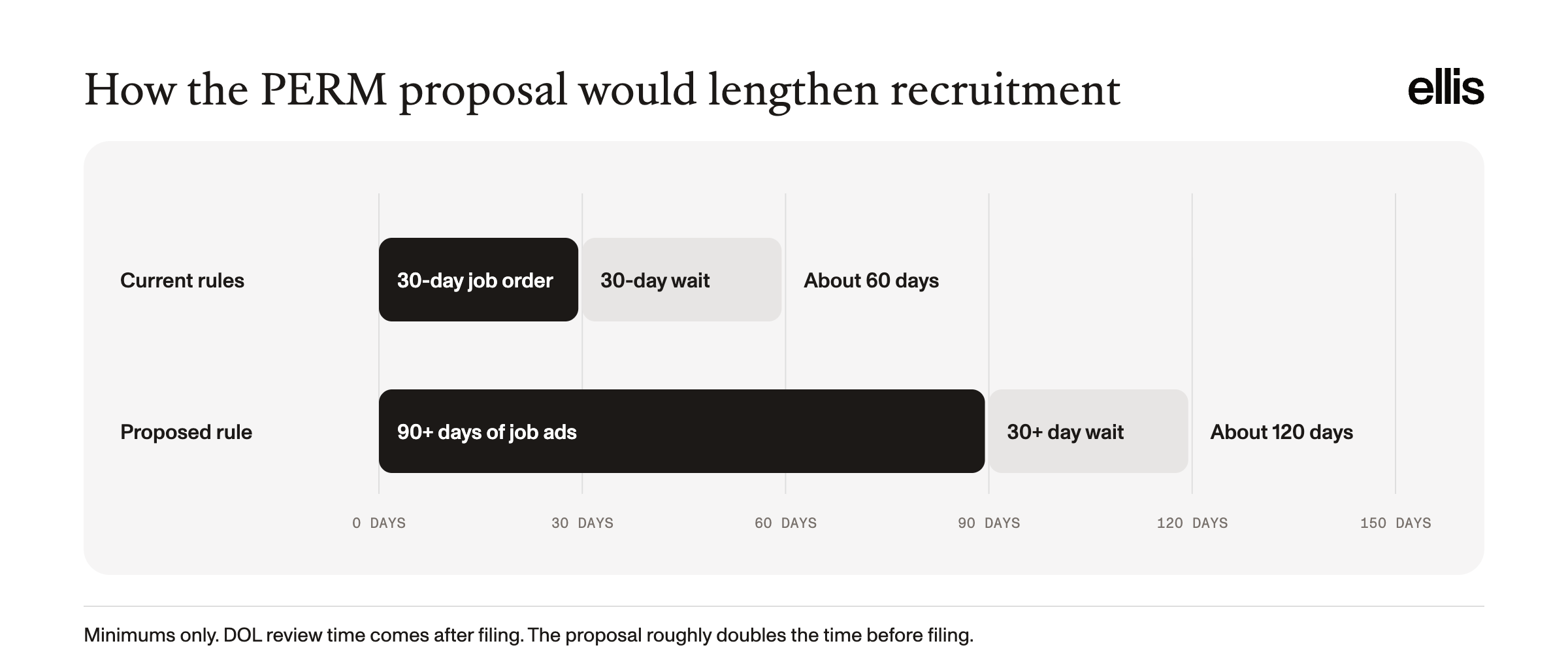
The wait before filing would grow. Employers would spend about four months on recruitment before they could file PERM: at least 90 days of ads, plus at least 30 days between the end of recruitment and filing. New recruitment reports and layoff checks could also slow DOL's review. DOL posts current PERM processing times on its FLAG processing times page.
When would the new PERM rules take effect?
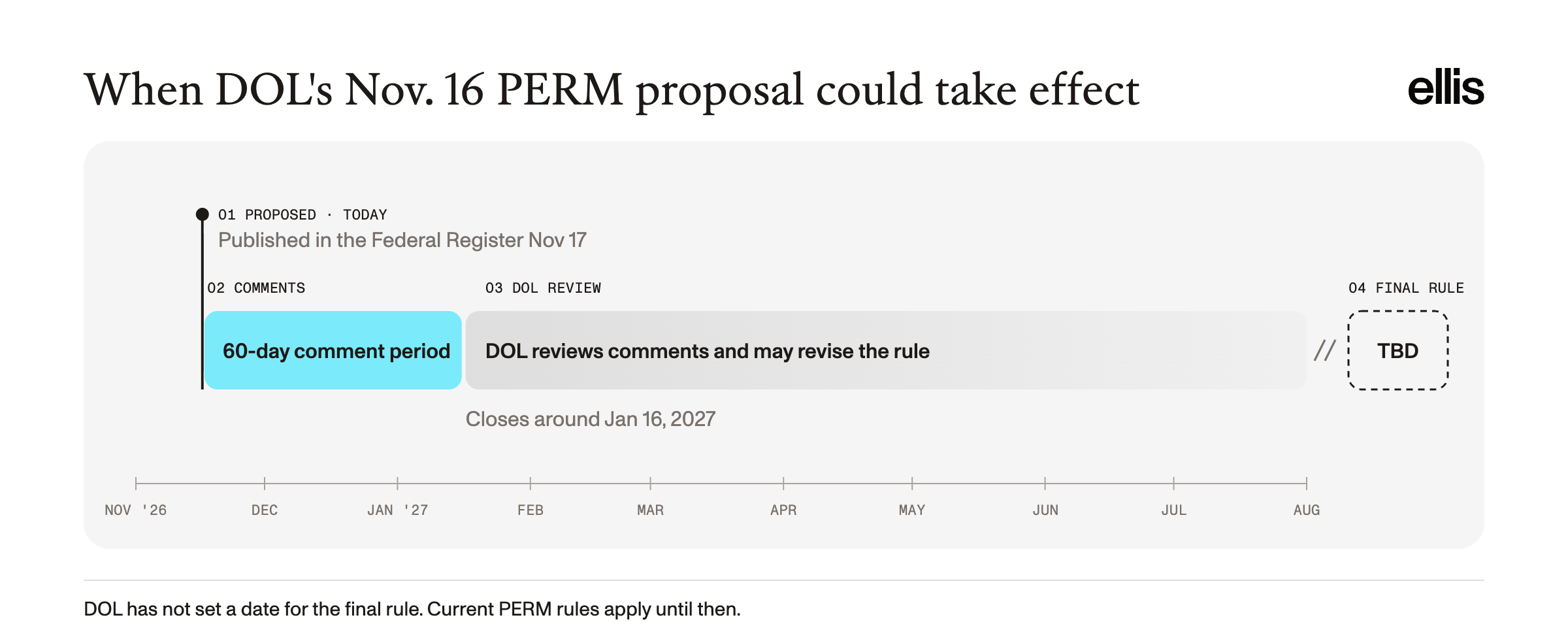
The changes take effect only after DOL publishes a final rule. The process generally runs in three steps:
- Comment period: The public has 60 days after the Federal Register publishes the rule on November 17, 2026, which puts the deadline around January 16, 2027.
- DOL review: DOL reads the comments and may revise the rule.
- Final rule: DOL publishes the final version with an effective date.
DOL has not set a timeline for the final rule. Courts also often hear challenges to major immigration rules, which can delay or block them.
How can the public comment on the PERM proposal?
Anyone can comment on Regulations.gov under docket ETA-2026-0133. DOL asks commenters to name the section they're addressing and explain the change they want. DOL posts comments publicly, so it advises leaving out personal and confidential information.
How Ellis can help
Ellis attorneys handle PERM labor certification, I-140 petitions, and green card filings, and the Ellis platform keeps every deadline and document in one place. As DOL moves this rule forward, Ellis attorneys track each change and how it affects sponsored employees. Get started with Ellis →
This article is for general informational purposes only and is not legal advice.