


The PERM process is the Department of Labor's labor certification process for many employment-based green cards. The employer establishes the job requirements, obtains a prevailing wage determination, completes recruitment to test the labor market, and then files ETA Form 9089. PERM stands for Program Electronic Review Management.
Let's break down what employers need to complete, what can delay a case, and what happens after certification.
Key Takeaways
- PERM has four main stages: establish the job requirements, obtain a prevailing wage determination, complete recruitment to test the U.S. labor market, and file ETA Form 9089.
- Timing matters throughout the process. Required recruitment generally takes place 30 to 180 days before filing, and employers must keep recruitment records for five years.
- An audit can extend processing. If the DOL audits a case, the employer generally has 30 days from the date of the audit letter to submit the requested evidence.
- PERM is only one step toward a green card. After certification, the employer generally moves to the I-140 stage before the worker can pursue permanent residence when eligible.
Need help with the PERM process? Ellis immigration attorneys guide you through the process and handle the work for you, while the Ellis platform keeps your case, documents, deadlines, and progress visible in one place. Schedule a free consultation →
What Is the PERM Process?
The PERM process is the U.S. Department of Labor (DOL) process used by many employers to obtain permanent labor certification for a foreign worker.
PERM stands for Program Electronic Review Management. The PERM labor certification process tests the U.S. labor market to show that there are not enough qualified and available U.S. workers for the permanent job.
For many employer-sponsored employment based green card cases, PERM is an important part of the labor certification process before the employer files an immigrant visa petition.
Who Needs PERM Labor Certification for an Employment Based Green Card?
Many employers need PERM labor certification when sponsoring a foreign national or foreign national employee for an EB-2 or EB-3 employment based green card.
PERM generally applies when an employer wants to sponsor a foreign worker for permanent employment and the employment-based category requires labor certification.
Some cases are exceptions, including:
- Certain EB-1 cases
- EB-2 National Interest Waiver cases
- Certain Schedule A occupations
- Certain cases involving university teachers
- Certain cases involving individuals with exceptional ability
The rules depend on the specific employment-based category and the worker's circumstances.
What Are the Key Stages of the PERM Labor Certification Process?
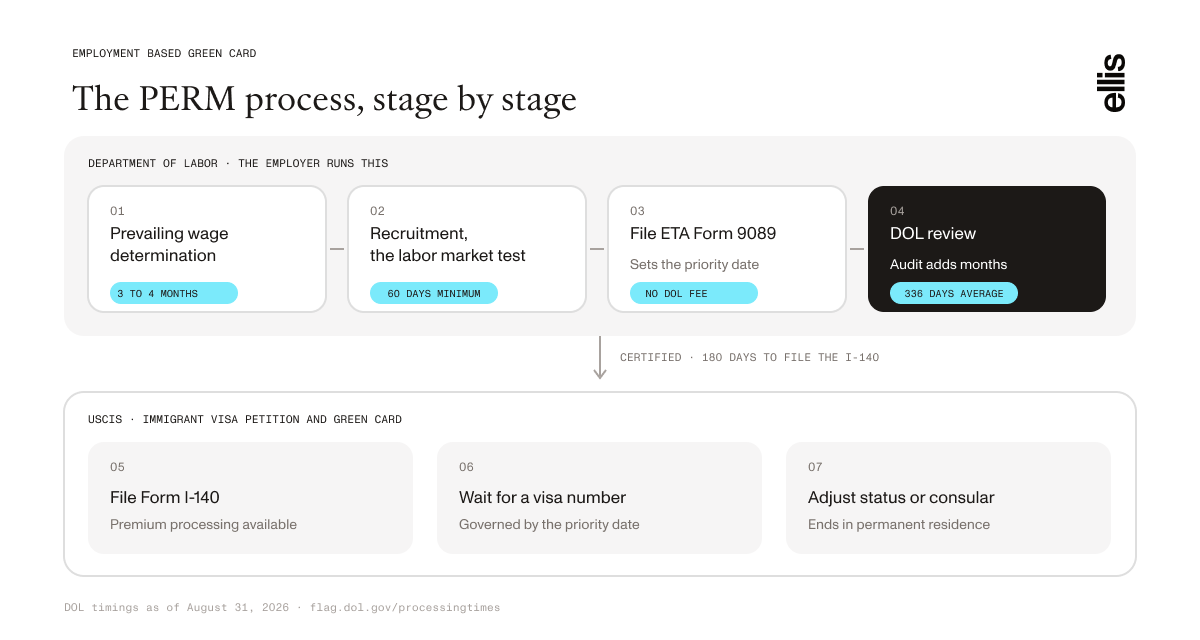
1. Set the Job Requirements
The employer first defines the job opening, including the job duties, minimum requirements, education, experience, skills, and other qualifications needed for the position.
Some jobs require an advanced degree, specialized experience, or other specific qualifications. The requirements must reflect the employer's actual business needs and should not be created simply to match the foreign national employee.
The employer should also describe the intended employment, including the permanent nature of the job and work location.
Inconsistent or unsupported job requirements can adversely affect the PERM application and may lead to delays or denial.
2. Obtain a Prevailing Wage Determination
Before filing PERM, employers must obtain a prevailing wage determination from the DOL.
The prevailing wage is based on factors such as:
- Job duties
- Work location
- Specific occupation
- Skill and experience requirements
- Available wage data
The wage determination helps ensure fair pay for the foreign worker and helps protect similarly employed workers in the U.S. labor market.
The DOL may consider wage data, including the average wage and average wage paid for comparable work. Employers submit a prevailing wage request, which is handled through the DOL's wage determination process and the National Prevailing Wage Center.
Delays in a prevailing wage decision can extend the overall PERM processing time.
3. Complete the Labor Market Test and Recruitment
The PERM process includes a labor market test to help employers find qualified U.S. workers. Employers must conduct the required recruitment before filing the PERM application.
For professional occupations, recruitment may include:
- A job order through the appropriate state workforce agency
- Newspaper job ads
- An internal notice
- Employer website postings
- Additional recruitment steps required by DOL regulations
Employers may also use private employment firms as part of their recruitment efforts when appropriate.
Required recruitment generally must take place 30 to 180 days before filing the PERM application, depending on the recruitment step.
Employers should carefully track each recruitment date to make sure the filing meets DOL timing rules.
The employer must document its recruitment efforts for potential audits and additional evidence requests. Employers generally must keep recruitment records for five years.
If qualified U.S. workers apply, the employer must review their applications and document the lawful, job-related reasons they were not selected.
4. File the ETA Form 9089
Once recruitment is complete, the employer files the ETA Form 9089 with the DOL. This is one of the final steps in the PERM labor certification process.
The form includes information about:
- The employer
- The foreign worker
- The job opportunity
- Job duties and requirements
- Prevailing wage
- Recruitment
- U.S. worker applicants
The employer must make sure the information is accurate and consistent with its recruitment records.
Inconsistencies in the ETA Form 9089, job requirements, or recruitment records can lead to delays, audits, or denial of the labor certification application.
How Long Does the PERM Labor Certification Process Take in 2026?
The PERM processing time depends on several stages, including:
- Prevailing wage processing
- Recruitment
- Preparation and filing of the PERM application
- DOL review
- An audit or request for additional evidence, if applicable
For many employers, the prevailing wage and DOL review are major parts of the timeline.
As of September 22, 2026, the DOL's Office of Foreign Labor Certification reported an average 336 calendar days to process PERM applications in analyst review. The DOL also publishes the month of cases currently being reviewed and separate information for audit review.
These figures apply to the DOL's PERM adjudication stage. They do not include the time needed for the prevailing wage determination, recruitment, case preparation, or later green card steps.
The entire process can take longer when issues arise, such as a delayed wage determination, recruitment problem, audit, or request for additional evidence.
DOL processing times can change, so employers should check current DOL processing information when planning a case.
What Is the PERM Priority Date?
The priority date for a PERM case is generally the date the DOL accepts the labor certification application for processing.
The priority date becomes important during the later green card process because it can affect when the foreign worker can apply for permanent residence, depending on visa availability.
What Does the Labor Market Test Require?
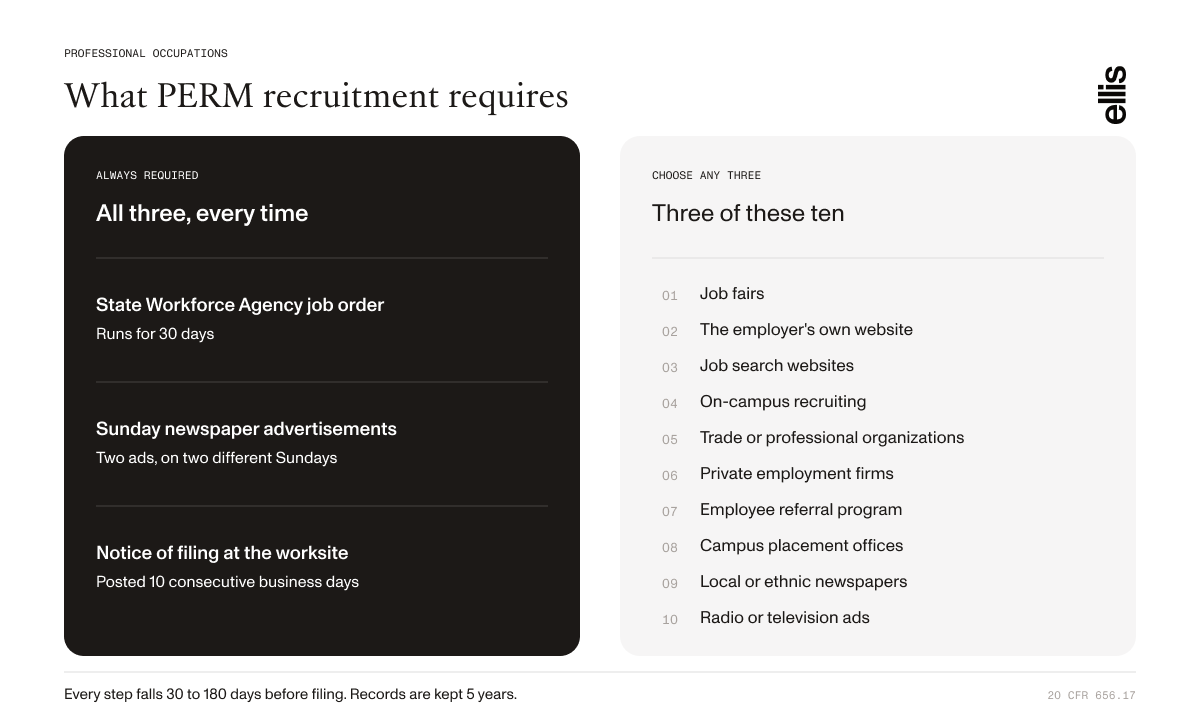
The labor market test is the recruitment part of the PERM process. Its purpose is to show that the employer tested the U.S. labor market before sponsoring the foreign worker.
If qualified, willing, and available U.S. workers apply, the employer must review their applications. The employer must have a lawful, job-related reason for not hiring a qualified applicant.
The employer must also keep the recruitment records in case the DOL later requests evidence or audits the case.
Can a PERM Labor Certification Application Be Audited?
Yes. The DOL can audit a PERM labor certification application and request additional evidence.
What Triggers a PERM Audit?
A PERM case may be selected for an audit based on factors related to the application or recruitment process. The DOL may also select cases through its audit procedures.
An audit may request records related to:
- Recruitment and job ads
- U.S. worker applicants
- Job requirements
- Prevailing wage
- Employer records
- Recruitment results
- Evidence that required recruitment steps were completed
The DOL may review whether the employer followed all applicable DOL regulations.
Inconsistencies between the ETA Form 9089, recruitment records, job requirements, or wage information can create problems.
What Happens During a PERM Audit?
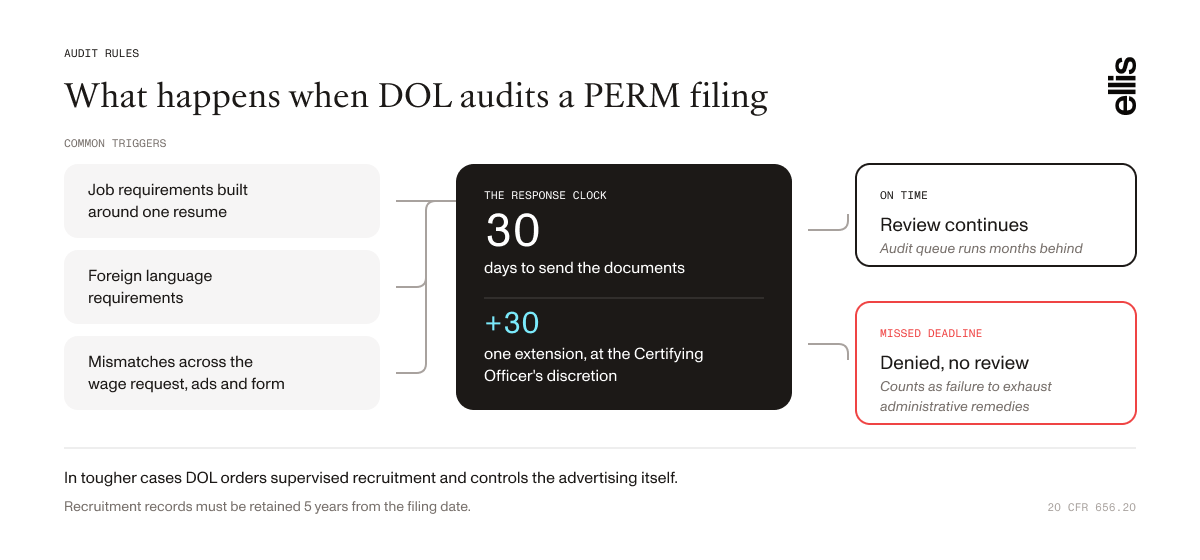
If the DOL sends an audit request, the employer generally must submit the requested documentation within 30 days of the date of the audit letter.
Depending on the case, the employer may need to provide recruitment records, applications from U.S. workers, copies of job ads, internal notices, or other supporting evidence.
Failing to respond on time or failing to provide the requested evidence can result in denial.
Audits can add months to the PERM processing timeline, which is why employers should maintain complete records throughout the process.
What Happens After PERM Labor Certification?
After the Department of Labor approves the permanent labor certification, the employer generally files an immigrant visa petition, Form I-140, with U.S. Citizenship and Immigration Services (USCIS).
When Does the Employer File the Immigrant Visa Petition?
The employer can generally move to the I-140 stage after PERM certification, subject to the applicable filing rules and deadlines.
The I-140 asks USCIS to classify the foreign worker under the applicable employment-based immigrant category.
The employer may also consider premium processing for an eligible I-140. Premium processing is not available for the PERM labor certification itself.
How Does PERM Fit Into the Green Card Process?
After the I-140 stage, the worker may continue toward permanent residence when eligible.
Immigrant Visa or Adjustment of Status
If the worker is in the United States and eligible, the next step may be to adjust status through Form I-485.
If the worker will complete the process outside the United States, consular processing may be used to obtain an immigrant visa.
The worker's priority date and visa availability affect when these steps can move forward.
PERM certification does not itself provide a green card, immigrant visa, or permanent resident status.
Get Help With the PERM Process
An immigration attorney can help employers comply with DOL regulations and avoid costly mistakes during the PERM labor certification process. The Department of Labor's Employment and Training Administration oversees programs that administer foreign labor certification.
Ellis attorneys help employers manage PERM from job requirements through labor certification, including:
- Drafting and reviewing job requirements
- Coordinating prevailing wage and recruitment timelines
- Preparing and reviewing job ads
- Preparing the ETA Form 9089
- Reviewing labor certification applications for inconsistencies
- Organizing recruitment records
- Responding to DOL audits and requests for additional evidence
Attorneys can also help employers determine whether requirements such as an advanced degree or specialized experience affect the PERM strategy. They can help address issues that arise during recruitment or an audit and make sure required records are properly maintained.
Ellis immigration attorneys guide you through the process and handle the work for you. For employers managing multiple labor certification applications, the Ellis platform keeps cases, documents, deadlines, and progress visible in one place.