

On Friday, July 17, 2026, USCIS said it has received enough petitions to fill the fiscal year 2027 H-1B cap of 85,000 visas. That means there will be no second lottery for FY 2027. Only people picked in the March 2026 lottery could file. No new registrations will be chosen this year.
The news ends the FY 2027 cap season. It was the first season to use a new wage-weighted selection system. It was also the first to run with a disputed $100,000 fee in the background.
Key takeaways
- What happened: On July 17, 2026, USCIS said it received enough petitions to fill the FY 2027 H-1B cap of 85,000 (65,000 regular plus 20,000 master's).
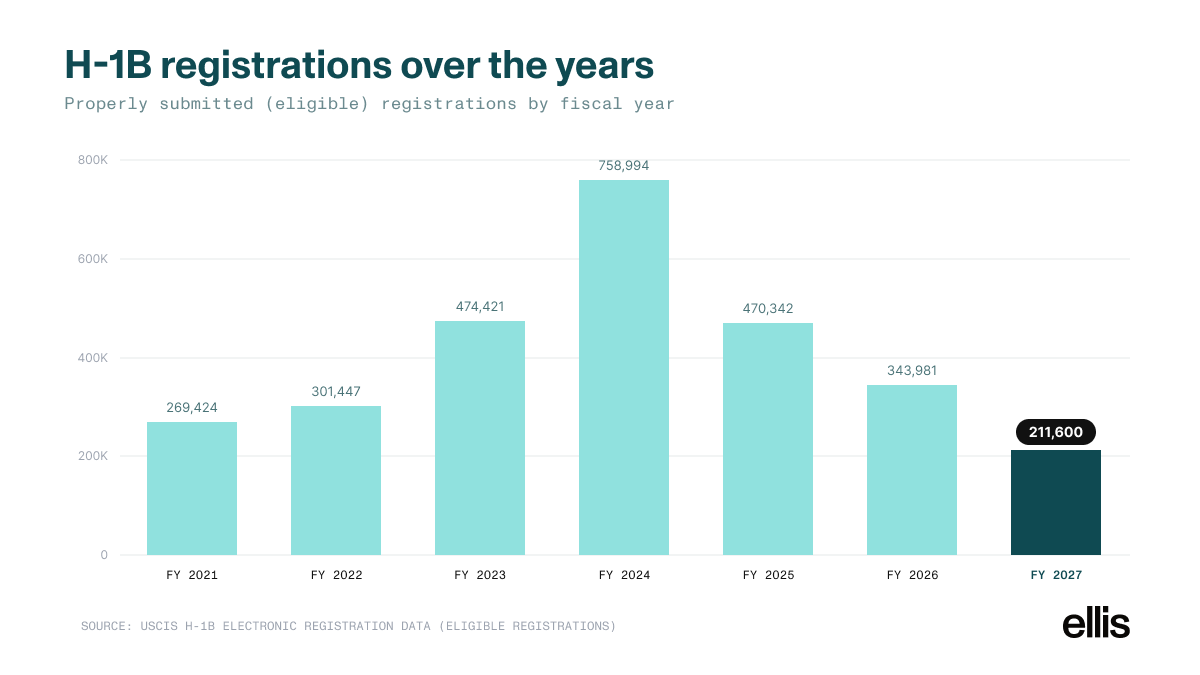
- By the numbers: USCIS said 211,600 registrations were properly submitted for FY 2027, down about 38% from 343,981 the year before.
- No second lottery: USCIS will NOT run a second FY 2027 selection. If your registration was not picked in March, you have no further chance this year.
- Not selected, or planning ahead? Whether you missed out this year or want better odds under the new wage-weighted rules next season, the immigration attorneys at Ellis can map your options. Talk to an attorney →
Why is there no second H-1B lottery for FY 2027?
USCIS will not run a second lottery for FY 2027. It holds a second selection only when the first round does not bring in enough petitions to fill all 85,000 spots. This year, it did.
In May, USCIS said 211,600 registrations were properly submitted for FY 2027, down about 38% from 343,981 the year before. Even with fewer registrations, enough people were selected and filed to fill all 85,000 spots: 65,000 under the regular cap and 20,000 under the advanced degree exemption for people with a U.S. master's degree or higher. If your registration was not picked in March, there is no second chance this year.
The rest of the season ran on the normal schedule. Registration opened on March 4 and closed on March 19. USCIS announced the initial selection on March 31. The petition filing window ran from April 1 through June 30.
Milestone | Date |
|---|---|
Registration period | March 4 to March 19, 2026 |
Initial selection announced | March 31, 2026 |
Petition filing window | April 1 to June 30, 2026 |
Cap reached announcement | July 17, 2026 |
What made the FY 2027 wage-weighted lottery different?
FY 2027 was the first cap year to use a wage-weighted selection instead of a random draw. The final rule took effect February 27, 2026. The more a job pays, the more entries a registration got, based on Department of Labor wage levels from Level I (entry level) to Level IV (highest paid).
Wage level | Entries in the selection |
|---|---|
Level IV | 4 |
Level III | 3 |
Level II | 2 |
Level I | 1 |
The Department of Homeland Security says the change is meant to send more H-1B visas to higher-paid jobs. In practice, it lowered the odds for entry-level and early-career workers compared with the old system.
Is the $100,000 H-1B fee still being charged?
A $100,000 fee from a September 2025 presidential proclamation also hung over the season. It applies to new H-1B petitions for people outside the United States who need consular processing, not to change-of-status filings, extensions, or amendments.
The fee has moved through the courts fast. A federal judge in Massachusetts struck it down on June 8, 2026, then put it back in effect days later while the government appeals. As of mid-July it is still being charged on consular-processing petitions, with the First Circuit Court of Appeals weighing whether it stays. Check the current status before you file or pay.
What should you do if you were or weren't selected?
If you were selected and your employer filed on time, you may have an approval already. After filing, the process typically looks like a receipt notice, then a decision or a request for more evidence. If your petition is approved, your H-1B start date can be no earlier than October 1, 2026.
If you were not selected, you have no cap path for FY 2027. Common options include cap-exempt employers such as universities and some nonprofits, other work visa categories, or registering again next season. F-1 students on OPT should watch their work permit dates. There is no cap-gap extension without a selected petition that was filed on time.
How Ellis can help
H-1B cap rules changed a lot this year, from wage-weighted selection to a disputed six-figure fee. Ellis is an immigration law firm with built-in case tracking. If you are weighing your options after this season or planning for the next one, the experts at Ellis can handle your case from filing to decision. Schedule a free consult →
This article is for informational purposes only and is not legal advice.