

In Brief: On June 22, 2026, DHS published a proposed rule to raise the N-400 naturalization fee by up to 80%. That means $760 goes to $1,330 on paper, and $710 goes to $1,280 online. The proposal also eliminates all income-based fee waivers for most applicants. The rule is not yet in effect. A 60-day public comment period is now open.
Key Takeaways
- DHS proposed raising the N-400 fee from $760 to $1,330 (paper) and $710 to $1,280 (online), a 75–80% increase.
- The N-336 appeal fee would rise from $830 to $1,475 on paper; $780 to $1,425 online.
- All fee waivers and the $380 reduced fee are eliminated. Only active and former military remain exempt.
- The rule is not final. A 60-day public comment period opened June 22, 2026.
The U.S. Department of Homeland Security published a proposed rule on Monday. It would make applying for U.S. citizenship significantly more expensive for hundreds of thousands of green card holders each year.
The paper filing fee for Form N-400, the main application for naturalization, would go from $760 to $1,330, a 75% increase. Online filers would see the fee rise from $710 to $1,280, an 80% jump. Applicants appealing a denial through Form N-336 would face an even steeper increase, from $830 to $1,475 on paper.
The proposal also eliminates all income-based fee waivers and reduced-fee options for almost all applicants.
What is DHS proposing, exactly?
The rule was published in the Federal Register on June 22, 2026. It is a Notice of Proposed Rulemaking, which means the public can comment before any final decision is made.
DHS calls the change a "full-cost, beneficiary-pays" model. Under it, applicants would pay the full processing cost of their citizenship application. That includes expanded background checks, interviews, vetting, and investigations now required by recent executive orders.
Past administrations kept naturalization fees below full cost to "promote citizenship and integration." The Trump administration is reversing that.
How much would the fees increase? Full breakdown.
Form | Purpose | Current Fee | Proposed Fee | Increase |
|---|---|---|---|---|
N-400 (paper) | Citizenship application | $760 | $1,330 | +75% |
N-400 (online) | Citizenship application | $710 | $1,280 | +80% |
N-336 (paper) | Appeal of denial | $830 | $1,475 | +78% |
N-336 (online) | Appeal of denial | $780 | $1,425 | +83% |
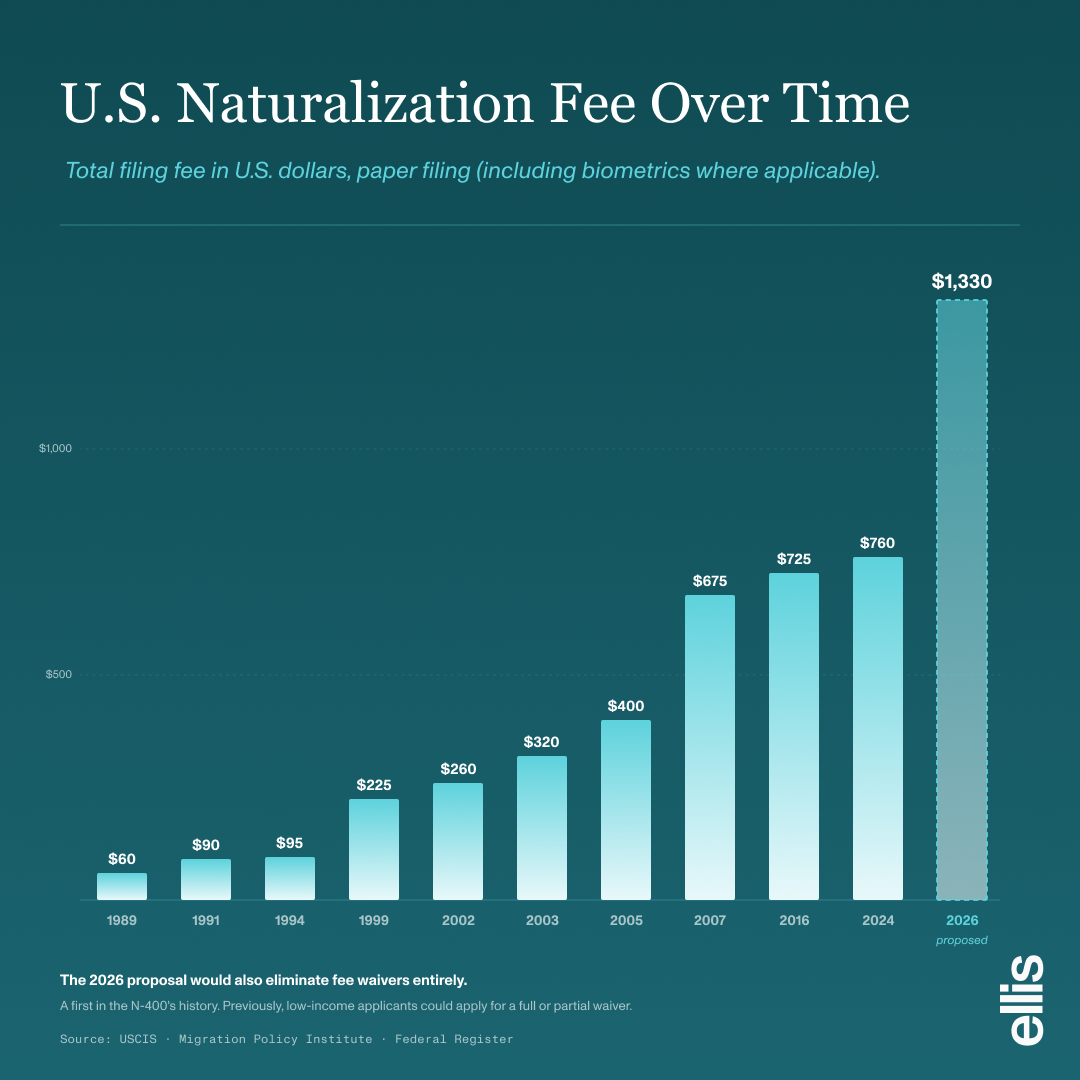
Form N-400 is the application filed by lawful permanent residents (green card holders) to become U.S. citizens. Form N-336 is filed by applicants who were denied naturalization and want to appeal that decision through a formal hearing.
Are fee waivers being eliminated?
Yes, under the proposal. Right now, applicants can get a full fee waiver based on income, public benefits, or financial hardship. There is also a reduced $380 filing fee for applicants earning up to 400% of the federal poverty guidelines. Both would disappear under the proposed rule. USCIS would "eliminate eligibility for fee waivers for aliens filing Form N-400 or Form N-336" and remove the reduced fee option entirely.
The one remaining exemption: active and former U.S. military service members, who are exempt from naturalization fees by law and would remain so under the proposal.
DHS argues that low or no-cost filing options can encourage ineligible applicants to apply. The agency states in its proposal that "free filing or inexpensive fees may encourage aliens who know or suspect that they are ineligible…to apply anyway."
Critics are likely to push back. They argue eliminating waivers would hit lower-income immigrants hardest, putting citizenship out of reach for lawful permanent residents who have been on the path for years.
Who is affected by this proposal?
The changes would primarily affect lawful permanent residents (green card holders) who are eligible to apply for U.S. citizenship through Form N-400. Hundreds of thousands file each year.
The impact would fall hardest on lower-income immigrants. Right now, fee waivers make naturalization accessible to applicants who receive public benefits or can show financial hardship. Under the proposed rule, those pathways close.
Why is the Trump administration raising naturalization fees?
The administration says the increase is about recovering costs. More vetting means more background checks, interviews, and investigations. That takes staff and resources. DHS says applicants should cover those costs.
The proposal also signals a broader shift in policy. Past administrations kept naturalization fees low on purpose, treating citizenship as something to encourage. The Trump administration disagrees. It says the cost should fall on the applicant, not the government.
This rule is part of a larger pattern of USCIS fee changes in 2026, which include premium processing fee increases and new fees mandated under the HR-1 Reconciliation Bill.
When would the higher fee take effect?
It has not taken effect. The rule is proposed, not final.
A 60-day public comment period runs from June 22, 2026. After comments close, DHS will review the feedback and may revise the rule before issuing a final version. Current fees ($760 paper, $710 online for N-400) stay in place throughout this process.
There is no confirmed effective date for the increase.
Should you file your N-400 before the fee increases?
If you are eligible for naturalization right now, filing at the current fee locks in the lower cost. You just need USCIS to receive your application before any final rule takes effect.
Eligibility requirements still apply. Filing before you are ready, or before gathering the right documentation, can slow or complicate your case. Speak with an immigration attorney before filing to confirm your eligibility and timing.
Steps to take now:
- Check your eligibility — You generally need 5 years as a permanent resident (3 years if married to a U.S. citizen), continuous residence, and good moral character.
- Gather your documents — Tax records, travel history, prior immigration filings, and identification.
- File Form N-400 — At the current fee, either online ($710) or by paper ($760).
- Monitor the Federal Register — Track when and if a final rule is issued at federalregister.gov.
Need help with your case? Ellis works with employees and employers on U.S. immigration strategy, including naturalization and green card applications. Get in touch to speak with an immigration attorney.
This article is for informational purposes only and does not constitute legal advice.